
Conveyor Systems
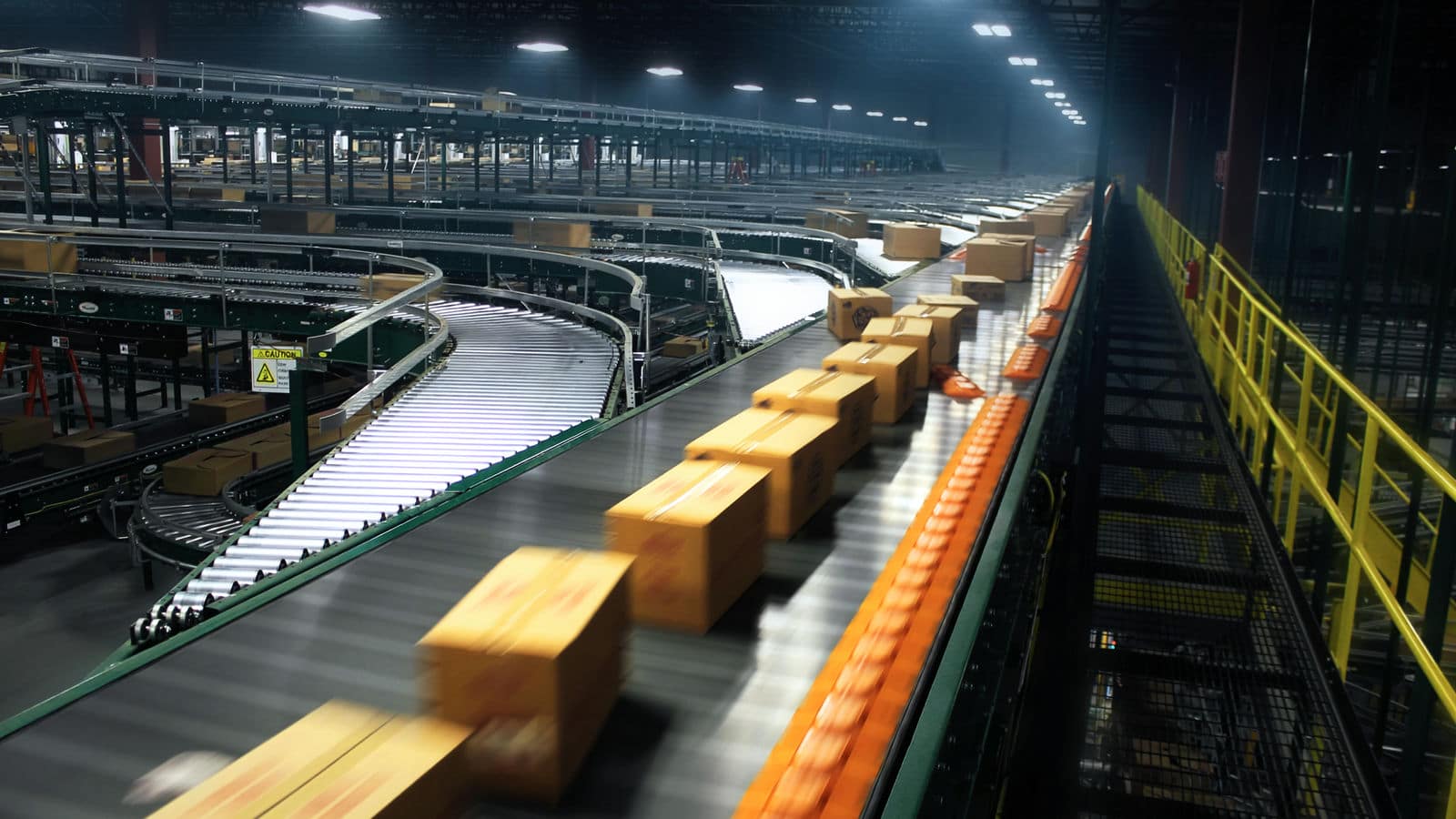
Efficient Product Flow from Receiving to Shipping
Increasing throughput and capacity requirements, shorter processing times, and rising operational costs are driving the production and distribution managers to consider automation such as conveyor systems. The task of processing large quantities of conveyable inventory — cartons, cases, totes, bags, and stuffed envelopes — to pallets, skids, gaylords, tubs, and wheeled carts is ideal for convey and sort automation.
Typical applications and uses of conveyor systems by industry
Conveyor and sortation solutions deliver reliable, high‑performance automation for moving and sorting goods across manufacturing, warehousing, and distribution environments. Typical applications include:
Wholesale, retail and B2B industries use conveyor systems in distribution centers (DCs) to assemble orders efficiently and accurately at the lowest cost per case.
In the food and beverage industry, conveyor systems are used to transport cartons and cases from production to storage, and or palletizing.
Durable goods manufacturers use conveyor systems to connect work-in-process (WIP) inventory with production and provide material flow between the functional areas of manufacturing plants.
Conveyor systems are used for crossdocking of parcels, both inbound and outbound.
Key benefits of conveyor systems in supply chain automation
Supply chain automation solutions that feature convey-and-sort come with several advantages:
Improved visibility and control
Load tracking and IIoT connectivity provide real‑time traceability, system insight, and precise accountability across operations.
Higher productivity with fewer labor resources
Conveyor systems automate product movement and sorting, reducing manual handling and minimizing labor required to operate.
Optimized and synchronized flow
Balanced, coordinated movement of goods shortens order processing times and improves overall system efficiency and accuracy.
Seamless system integration
Convey‑and‑sort solutions integrate with inventory storage, order picking, and downstream automation to create streamlined workflows.
Scalability and adaptability
Reconfigurable mechanical and controls architectures allow systems to scale and adjust as operational needs change.
Lower cost per unit handled
High efficiency, reduced labor, and optimized flow deliver one of the lowest costs per case or item handled.
Conveyor technology for multiple applications
An integrated suite of package conveyor technology, Dematic Modular Conveyor transports case, tote, tray, polybag, and parcel envelope loads efficiently and effectively. It provides a complete range of modules that create a highly efficient material flow configuration. This conveyor technology is integrated with other devices such as goods-to-person workstations, scanners, sorters, label print and apply devices, case sealers, in-line weigh scales, palletizers, and robotics.
Applications
- Routing of inbound goods
- Cross docking
- Transport of cases and totes to pick modules
- Carton transport from case pick modules
- Carton transport from piece pick modules
- Batch pick and sort order consolidation
- Interlink connecting functional areas
- Transport to outbound parcel shipper, area code, route, etc.
- Transport to outbound shipping doors
Key Attributes
- Variety of functions: transport, accumulate, gap, divert
- Accommodates cartons, totes, bags, stuffed envelopes
- Universal side channel
- Many system-layout options
- Standard components common to all conveyor modules
- Controllers connected with standard CAN bus architecture
- Low-voltage DC motorized rollers and AC drives
- Roller and belted surfaces
- Easy to reconfigure
Family of Modules
Dematic Modular Conveyor uses a universal, metric side frame for all modules for easier reconfiguration as operational changes occur. Made up of over 40 standard conveyor models for configuring conveyor networks, Dematic Modular Conveyor provides a wide variety of functions, including transportation, accumulation, gapping, and diverting (right angle transfers and steerable wheel diverts).
The conveyor is available in several standard widths and configurations, including horizontal, inclining, and declining sections with straight, curved, or angled junctions (wedges).
Family of Modules
Dematic Pallet Conveyor provides transportation and accumulation functionality through modules that include:
Dematic Modular Conveyor System (Dematic MCS)
Dematic Modular Conveyor System (Dematic MCS) is a totally integrated package conveyor technology. Whether handling cases, totes, trays, poly bags, or parcel envelopes, Dematic MCS transports them efficiently and effectively. MCS offers a complete range of modules to create a highly efficient material flow configuration. MCS is often integrated with other devices such as scanners, sorters, label print and apply devices, case sealers, in-line weigh scales, palletizers, and robotics.
Why choose Dematic as your automation partner
Built for continuous improvement
Our partnership continues long after go‑live. Dematic Lifecycle Solutions & Services refine, modernize, and expand systems as your business evolves. Assessment, optimization, training, and upgrades extend equipment life, improve performance, and reduce waste. Ongoing support featuring modular technologies and adaptable software allow you to grow your operations without disruption, securing long‑term value.