
Case & Piece Picking
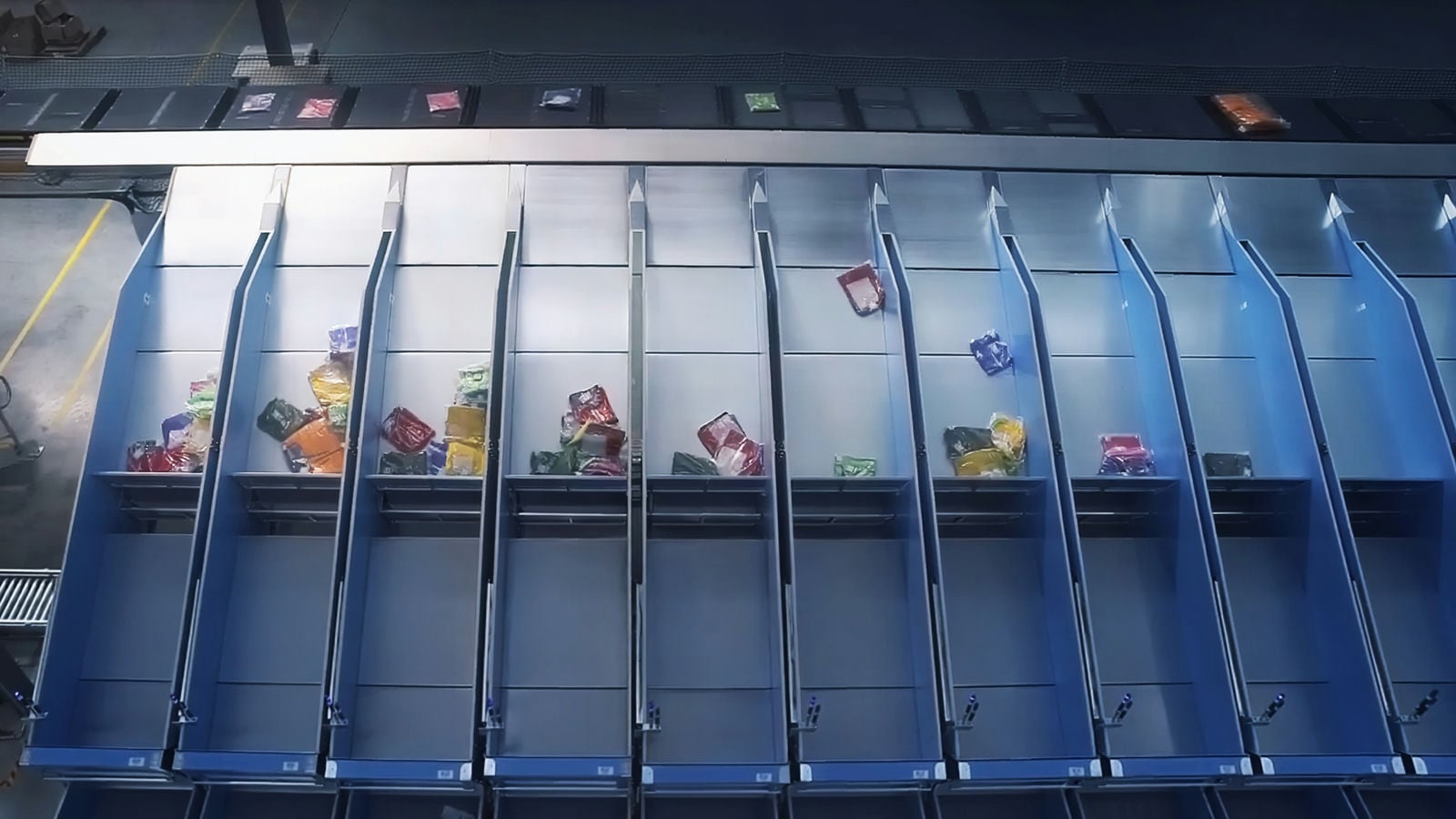
Changing business conditions, omnichannel distribution requirements, supply chain disruptions, increased customer expectations and the high cost of order fulfillment are all forcing companies to reimagine their picking operations. Retailers, e-tailers, wholesalers, and manufacturers alike are implementing resilient and responsive on-demand order fulfillment operations that enable flexible and scalable picking processes.
Dematic piece and case pick systems increase pick rates and accuracy and streamline order fulfillment efficiency while reducing the time required to pick, pack and ship orders. Advances in order fulfillment technology combined with new operational methods and management software can drive vast improvements within your picking operation.
Pick system methods
Most companies use batch or discrete picking methods. Dematic’s application engineers analyze your activity profile to determine the most appropriate pick system and configuration, considering factors such as SKU velocity, lines per order, channel to market, delivery or pickup timing, and return on investment.
Batch Pick
Picking multiple orders with one pass through the warehouse can make order assembly more efficient. This process assigns a group of orders to a batch and is also known as “batch picking.”
The WES order management software directs the batch picking process that assembles orders strategically in waves. Batch pick systems are used frequently for retail store replenishment and route delivery applications where sufficient time is available for advanced order planning.
Discrete Pick
Each order is picked as a discrete task, one order at a time, using case pick to a pallet or goods-to-person picking. The discrete picking process is often deployed for customer direct, e-commerce operations, where items picked are placed directly into a shipping container, most often a cardboard box.
Determining the right picking solution
Dematic offers a comprehensive portfolio of picking and putting technologies. Modular order management and processing software provide complete control from fully automated distribution centers to warehouses with manual operations.
Piece Picking Solutions
Dematic offers a selection of collaborative and fully automated piece picking solutions that meet the needs of your specific application. Collaborative picking solutions incorporate warehouse employees into the pick system operation, while a fully automated picking solutions do not require labor to operate.
The person (order picker) stays in one place, and the system brings the goods or SKUs to the person. The SKU is picked and then sent back to a storage location. The basic system components include an automated storage medium for the product inventory, a conveyance method to bring the SKUs to the pick station, an ergonomic workstation, and software that controls the flow.
Robotic piece picking selects, grips, lifts, and places individual items of varying sizes and shapes into the order container. Goods-to-robot configurations can operate three shifts per day, reducing dependance on manual labor for repetitive tasks. It is ideal for specific categories of small SKUs, such as personal care items, cosmetics, packaged food, office supplies, and variety of other package types, shapes, and sizes.
An automated storage sub-system (such as a miniload AS/RS or Dematic Multishuttle®) configured to store SKUs in its upper levels that supply pick faces on its lower levels. As workers pick orders, the system pulls and places SKUs from its upper levels to dynamically replenish the pick faces.
The zone route discrete picking process arranges the warehouse into picking zones, each of which supports a specific SKU category (typically by velocity). The layout typically includes 4-16 picking zones and the system can accommodate the transport of inbound inventory for restocking.
With put-directed order fulfillment, operators put product to a location instead of picking product from a location. Put directions can be provided by voice or light technology. A container of one product SKU is delivered to an order fulfillment zone where an operator “puts” the SKU into shipping containers for delivery to retail stores, wholesalers, industrial users, or directly to consumers. As a destination container is filled, operators can swap it out for another empty container.
Each operator is equipped with a wearable computer that provides verbal instructions like pick location, pick quantity and confirmation request. The pick cart holds multiple order containers. With one pass through the warehouse, anywhere from 10-40 orders—depending on cart and order size—are batch picked.
The workstation is made up of a “wall” of shelving with individual compartments or “cubbies” that each hold one customer order. The solution serves as an order consolidation and packing method, bringing high productivity, order accuracy, speed and efficiency to the order fulfillment process. The process combines order lines from multiple orders and creates high density, efficient picking. The put wall is used to consolidate and pack the items for each individual order.
Dematic Automated Piece picking can be combined with robotics for complete optimization of your picking processes, or it can integrate into your current processes to better utilize your workforce, having them focus on tasks of higher complexity. Learn about the benefits of Dematic Automated Piece Picking and whether full automation is right for your business.
Case Picking Solutions
Dematic offers collaborative picking and automated case picking solutions. The most appropriate case pick solution is selected based on your application’s requirements. Collaborative picking solutions incorporate warehouse employees into the pick system operation, while automated picking solutions do not require labor to operate.
The person (order picker) stays in one place, and the system brings the goods or SKUs to the person. The SKU is picked and then sent back to a storage location. The basic system components consist of an automated storage medium for the product inventory, a conveyance method to bring the SKUs to the pick station, an ergonomic workstation, and software to control the flow.
Warehouse staff use pallet trucks or fork trucks for travel to the pick locations. The order pallet is built as the operator travels to each case storage location and selects cases.
The operators are equipped with a wearable voice computer that gives verbal instructions including location and case pick quantity. Using the scanner connected to the wearable computer ensures the accuracy of each pick. At the pick location, the associate removes the case(s) stored on flow rack, pallet rack, or on the floor, and transfers onto the pallet truck.
Warehouse staff are positioned in pick modules and build the order pallet as they travel to each case storage location and select cases for placement on the conveyor. Equipped with a wearable voice computer that gives verbal instructions like location and case pick quantity, operators use the scanner connected to the wearable computer to ensure pick accuracy. At the pick location, the associate removes the case(s) stored on flow rack, pallet rack, or on the floor, and transfers them onto the conveyor system.
Warehouse staff use pallet trucks or fork trucks carrying a single SKU pallet of cases and the order pallet is built as the operator travels to each put to pallet location and places cases on the order pallet.
Equipped with wearable voice computers that give verbal instructions—including location and quantity of cases to put—operators use scanners connected to the wearable computer to ensure case pick accuracy.
The solution is based on a configuration that stores cases in a mini-load storage and retrieval machine (SRM) or Dematic Multishuttle. It dynamically replenishes the pick faces based on customer demand and stores case inventory in the upper levels of the automated storage sub-system. Cases of active SKUs are pulled and placed on the lower levels for picking. Discrete orders are picked when warehouse associates traverse the outside of the SRM rack and pick the required cases.
Traditional case pick and pallet building methods require labor and often rely on manual lifting of cases. Automated case picking does not require labor and includes both an automated case storage sub-system and an automated case palletizer. This solution is ideal for mixed case palletizing applications for retail store replenishment.
Human Machine Interface (HMI) for Picking
Consisting of a flat screen/touch screen, a tablet computer, and a voice directed device or radiofrequency (RF) device, the HMI instructs associates what to pick and in what quantities.
Pick station operators are directed by a flat screen information display of an image of the item to pick and quantity required for each order. An integrated weigh scale at the pick location (optional) checks expected weights, further enhancing accuracy and ensuring that any errors are identified and corrected on the spot.
Recognized as one of the most effective methods for increasing productivity and accuracy in picking operations, voice technology features hands-free, eyes-free operation. Operators wear a portable belt-mounted voice terminal and headset. Workers hear instructions and perform tasks without having to look down at a handheld computer screen display or sort through paper lists.
The pick-to-light system uses a combination of display units to point operators to specific stock locations. Typically, each SKU has a display with a light, an acknowledgement button, and a digital readout to indicate quantity.
Pick-to-light systems in reverse, put-to-light displays point the operator to locations requiring an item to be put, rather than picked. The operator scans an item—either a piece or a case—and then individual displays point out which containers require that item. A display unit at each container location shows how many of the item that container requires. The operator uses an acknowledgement button to confirm each put.
Picking staff can be directed to each assignment using handheld RF devices. The operator scans the barcode or UPC code and then performs the order picking tasks.
For hands-free scanning, pickers wear a wrist mounted computer with a ring scanner, which enables the pickers to have both hands available for picking products. The display screen on the wrist-mounted computer directs pickers to their next assignment.
Picking the right software
The pick system management software is critical to creating a powerful order fulfillment system. Before selecting the appropriate picking configuration and method, Dematic determines the order download strategy from the host and the pick system and then the order planning and execution strategy. The system management software is referred to as the warehouse execution system (WES).
Why choose Dematic as your automation partner
Built for continuous improvement
Our partnership continues long after go‑live. Dematic Lifecycle Solutions & Services refine, modernize, and expand systems as your business evolves. Assessment, optimization, training, and upgrades extend equipment life, improve performance, and reduce waste. Ongoing support featuring modular technologies and adaptable software allow you to grow your operations without disruption, securing long‑term value.